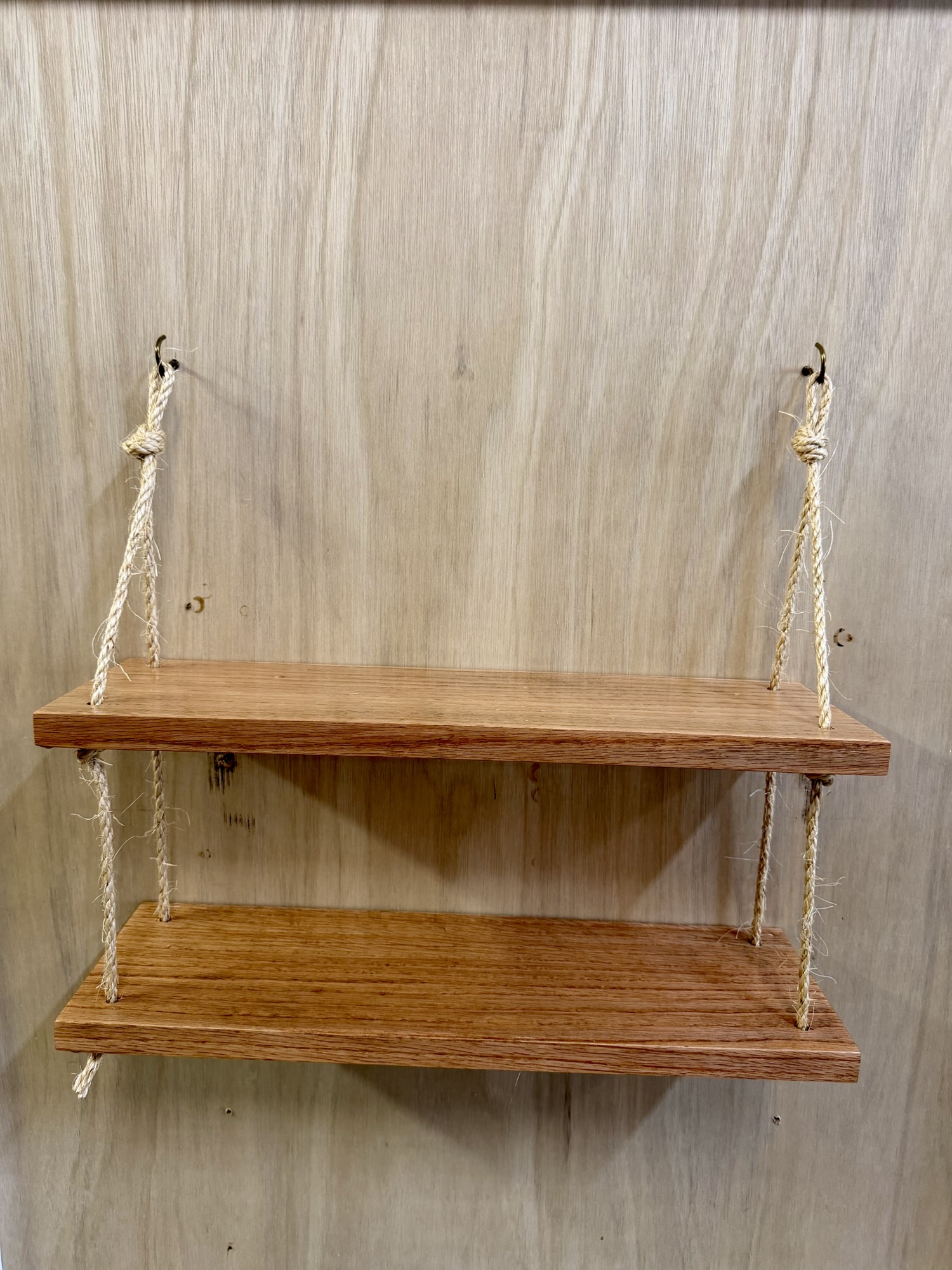

Some days in the shop start with a master plan, and other days you’re just staring at a cart of materials and a pile of lumber you haven’t found a use for. That was me this morning. Then, I spotted a roll of clearance sisal rope and decided to finally use it for a simple hanging shelf.
In my head, this was going to be one of those satisfying, quick weekend builds. It turned into a massive test of patience. This project got so frustrating that it almost ended up straight back in the scrap pile. Here is exactly what went sideways, and how I managed to save it.
For version one, my plan was simple: cut boards, drill holes, tie rope, and enjoy the finished project. Nope. It did not go down like that at all. The cutting, sanding, and drilling went fine. The real nightmare started when I tried tying the rope.
In case you have never attempted this, trying to tie rope to an object that will not stop moving is exhausting. The boards kept sliding everywhere, and getting the knots tight felt impossible. After testing my patience to the absolute limit, I finally hung it up on my picture wall. It was a total fail. The shelves were completely crooked and kept tilting forward.

I decided to step away for a bit and clear my head by applying polyurethane to a different project. When I returned to the hanging shelf dilemma, I knew I had to solve two things: a way to lock the boards down while tying the rope, and a setup to hang them exactly how they would sit on the wall so they would not slide. I scrounged up some scrap lumber and built a quick jig. It looked like a Frankenstein mess, but it worked beautifully. It held the boards completely secure so I could finally pull the rope tight.

That brought me to challenge number two: keeping the shelves perfectly level and balanced so they would not tilt. Right about then, my wife walked into the shop. She took one look and suggested tying a knot at the very top first, then adding cup hooks directly to my jig so I could tie the rest of the shelf while it was hanging in place. I have to admit, it was a brilliant idea and it worked like a charm. Let us just keep that part between us.

With the assembly process figured out and the final reveal ready, I wanted to double-check my work. I decided to make a few more shelves to truly test the jig and process. This time, I raided the good wood pile and grabbed some oak, poplar, and cedar. Since the tying jig worked so well, I decided to go ahead and build a second jig specifically for drilling. I made a simple guide block with a hole alignment sleeve and a dedicated relief slot for the wood shavings to clear out. It worked like a charm. I knocked out all 12 holes in about two minutes flat.

Here is the Cedar, Oak and Poplar ready for assembly. I also knocked out another pine set.

Usually, I’m a common pine guy through and through. But a while back, I grabbed one of those white-strapped cull packs from the home center for next to nothing, and it was a total jackpot. It had random cutoffs of oak, poplar, and cedar just sitting there waiting for the right project.
Since these hanging shelves don’t require massive, perfect boards, they are the ultimate way to put a discount cull pack to use. It just goes to show you don’t need to spend a fortune at the lumber yard to get high-end results—you just have to keep your eyes peeled for those clearance bundles!


So there they are: four unique hanging shelves made with just a few small pieces of 1×6 lumber. The Oak is fantastic to work with because it drills clean and sands down really smooth. Poplar and Pine share very similar characteristics, though they both require a little more attention when cutting, drilling, and sanding. The Cedar is also great to work with—my only observation is that it tends to produce a lot of fuzzy wood hairs during the final finishing stages.
Over to you—stop by the big box stores and see what treasures you can find in those cull bundles. Since these hanging shelves only require a few small pieces of 1×6 lumber, those heavily discounted wood piles are the absolute perfect place to score premium wood like oak or cedar for pennies on the dollar. Happy hunting and happy building!
Check out my shop page for all my free project downloads. I will be adding this project soon.
Leave a Reply